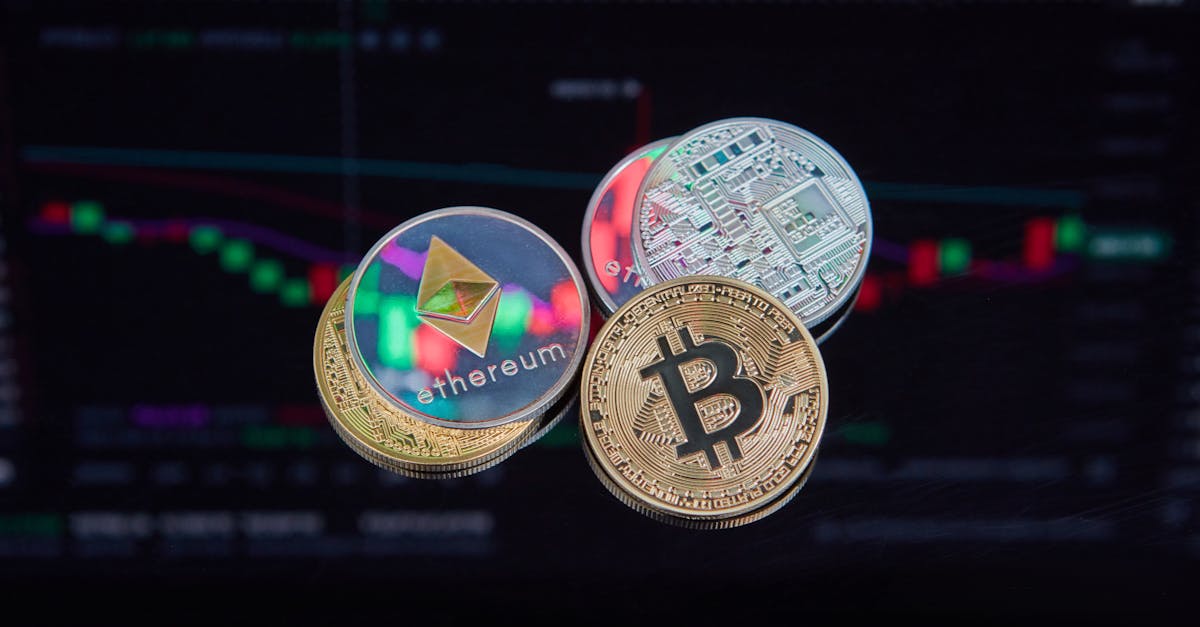
As the crypto landscape continues to mature, Ethereum (ETH) remains at the forefront of innovation, driving decentralized finance (DeFi), non‑fungible tokens (NFTs), and Web3 infrastructure. In early 2025, a leading market analyst unveiled a bold forecast: Ethereum’s price could climb to $3,200 by the end of Q3 2026. This projection has sparked intense debate among investors, developers, and regulators alike. To understand the plausibility of such a target, we must examine Ethereum’s current fundamentals, the broader 2025 crypto market environment, the analyst’s methodology, and the risks that could derail the rally.
Current State of Ethereum in 2025
By the close of 2024, Ethereum had successfully completed the Shanghai Upgrade, which enabled staked ETH withdrawals and further reduced selling pressure from validators. The network’s average daily transaction volume hovered around 1.2 million, with gas fees stabilizing in the $5‑$15 range after the implementation of EIP‑1559 fee‑burn mechanics and Layer‑2 scaling solutions. Total value locked (TVL) in Ethereum‑based DeFi protocols surpassed $180 billion, representing roughly 55 % of the entire DeFi ecosystem. Meanwhile, NFT trading on Ethereum maintained a steady $2‑$3 billion monthly volume, underscoring the chain’s dominance in digital collectibles.
On the institutional front, major asset managers launched Ethereum‑focused exchange‑traded products (ETPs) in both the United States and Europe, attracting over $12 billion in net inflows during 2024. Regulatory clarity improved in jurisdictions such as the EU’s MiCA framework and the U.S. SEC’s tentative approval of Ethereum futures contracts, fostering a more predictable environment for long‑term investors. These developments have collectively strengthened Ethereum’s narrative as a “digital oil” that powers the next generation of internet applications.
Key Facts Driving Ethereum’s Growth Potential
Network Upgrades and Scalability
Ethereum’s roadmap beyond 2025 includes the Danksharding phase, slated for mainnet deployment in early 2026. Danksharding aims to increase the network’s data availability capacity by a factor of 10‑100, dramatically lowering rollup costs and enabling thousands of transactions per second (TPS) on Layer‑2 solutions. Complementary upgrades such as EIP‑4844 (Proto‑Danksharding) already deployed in late 2024 have cut average rollup fees by roughly 70 %, making DeFi and NFT interactions more affordable for retail users.
Adoption Metrics
- Active addresses: ~650 k daily (up 18 % YoY)
- Developer commits: >4 k monthly on GitHub (top‑ranked smart‑contract platform)
- Staked ETH: ~22 million ETH (≈18 % of total supply) earning ~4‑5 % APY
- Cross‑chain bridges: Over $30 billion locked in Ethereum‑centric bridges like Arbitrum Bridge and Optimism Gateway
Macro‑Economic Tailwinds
In 2025, global inflation rates moderated to the 2‑3 % range, prompting central banks to pause aggressive rate hikes. Lower real‑yield environments traditionally boost demand for non‑yield‑bearing assets like cryptocurrencies. Additionally, the rise of tokenized real‑world assets (RWAs) on Ethereum—such as tokenized bonds and real‑estate funds—has introduced new use‑cases that attract traditional finance capital.
Expert Analysis: The $3,200 Price Target
The forecast originates from Alexandra Moreno, a senior crypto analyst at Digital Asset Insights, who combines on‑chain metrics, macro‑economic modeling, and sentiment analysis in her valuation framework. Moreno’s approach begins with a discounted cash flow (DCF) model adapted for Ethereum, treating network fees as the primary cash‑flow generator. She projects that, assuming a conservative 12 % annual growth in transaction volume and a 5 % yearly increase in average gas price (driven by demand for block space), annual fee revenue could reach $25 billion by 2026.
Using a discount rate of 8 % (reflecting the risk premium for crypto assets), Moreno derives a fair value of approximately $2,800 for ETH. She then adds a strategic premium of 15 % to account for Ethereum’s first‑mover advantage in smart contracts, its entrenched developer ecosystem, and the anticipated upside from Danksharding. This premium pushes the target to $3,200 by Q3 2026.
Moreno also cross‑checks her model with a metcalfe‑law‑based valuation, which estimates network value proportional to the square of active addresses. With active addresses forecasted to reach 900 k daily by mid‑2026, the metcalfe model yields a price band of $3,000‑$3,400, reinforcing the DCF outcome.
Notably, the analyst emphasizes that the $3,200 figure is contingent on two key assumptions: (1) no major regulatory setbacks that restrict Ethereum’s use in DeFi or NFTs, and (2) continued progress on Layer‑2 adoption without significant security incidents. Should either assumption falter, the price trajectory could deviate substantially.
Comparison Table: Ethereum vs. Competitors (2025‑2026 Outlook)
| Metric | Ethereum (ETH) | Bitcoin (BTC) | Solana (SOL) |
|---|---|---|---|
| Current Price (early 2025) | $2,100 | $28,000 | $22 | Projected Price (end Q3 2026) | $3,200 (Analyst) | $45,000 (Consensus) | $55 (Optimistic) |
| Annual Transaction Volume (2024) | 420 M | 90 M | 1.1 B |
| Average Fee (USD) | $8 | $2 | $0.0005 |
| TVL in DeFi | $180 B | $12 B (via WBTC) | $8 B |
| Staked Supply (% of total) | 18 % | N/A (PoW) | 6 % |
| Upcoming Major Upgrade | Danksharding (2026) | Taproot‑2 (2026) | Firedancer (2026) |
The table highlights Ethereum’s balanced positioning: while it does not match Solana’s raw throughput, it offers far greater security and decentralization, and its fee market remains sustainable thanks to EIP‑1559 burns. Bitcoin, though a store of value, lacks the programmable functionality that drives Ethereum’s fee‑based revenue model.
Risks and Challenges to the $3,200 Target
Regulatory Uncertainty
Despite recent clarity, the possibility of a restrictive stance from major economies—such as a U.S. classification of ETH as a security or stringent KYC/AML requirements on DeFi protocols—could dampen institutional participation and curb transaction growth. Any such development would directly impact the fee revenue assumptions underpinning Moreno’s model.
Technological Setbacks
The rollout of Danksharding is technically complex. Delays or unforeseen bugs could postpone the anticipated scalability gains, keeping gas fees higher than projected and reducing the attractiveness of Ethereum for high‑frequency applications. Additionally, competition from emerging Layer‑1 chains that offer comparable security with lower costs could siphon developer activity.
Market Macro‑Shocks
A sudden resurgence of inflation, leading to aggressive monetary tightening, could increase the opportunity cost of holding non‑yielding assets. Furthermore, a major macro‑event—such as a geopolitical crisis or a systemic banking shock—might trigger a flight to safety, favoring Bitcoin or traditional assets over Ethereum.
Security Incidents
While Ethereum’s proof‑of‑stake consensus has proven robust, any high‑profile smart‑contract exploit or validator slashing event could erode confidence. The network’s reliance on a large validator set means that coordinated attacks, though unlikely, remain a theoretical risk.
Conclusion
Ethereum’s journey from a pioneering smart‑contract platform to the backbone of a multi‑trillion‑dollar decentralized economy continues to gather momentum. The $3,200 price target for end‑Q3 2026, as proposed by top analyst Alexandra Moreno, rests on a solid foundation of growing network usage, anticipated scalability upgrades, and favorable macro‑economic conditions. However, the path is not without obstacles: regulatory headwinds, technical execution risks, and broader market volatility could all influence the actual outcome.
For investors, the key takeaway is to view Ethereum not merely as a speculative asset but as a utility‑driven token whose value is intrinsically linked to the health and expansion of its ecosystem. Monitoring on‑chain metrics—such as active addresses, transaction volume, and staked ETH—alongside regulatory developments will provide the most reliable signals for whether the $3,200 milestone is attainable.
Key Takeaways
- Ethereum’s 2025 fundamentals show strong growth in DeFi, NFTs, and institutional adoption.
- The analyst’s $3,200 price target combines a DCF model of fee revenue with a strategic premium for network effects.
- Key drivers include the upcoming Danksharding upgrade, rising transaction volume, and sustained ETH staking yields.
- Primary risks involve regulatory crackdowns, delays in scalability upgrades, and macro‑economic shocks.
- Compared to Bitcoin and Solana, Ethereum offers a unique blend of security, decentralization, and programmable utility.
Call‑to‑Action
Stay ahead of the curve in the fast‑moving crypto space. Subscribe to our weekly newsletter for deep‑dives, price alerts, and expert analysis delivered straight to your inbox. Join the conversation and make informed decisions with the latest insights on Ethereum and beyond.