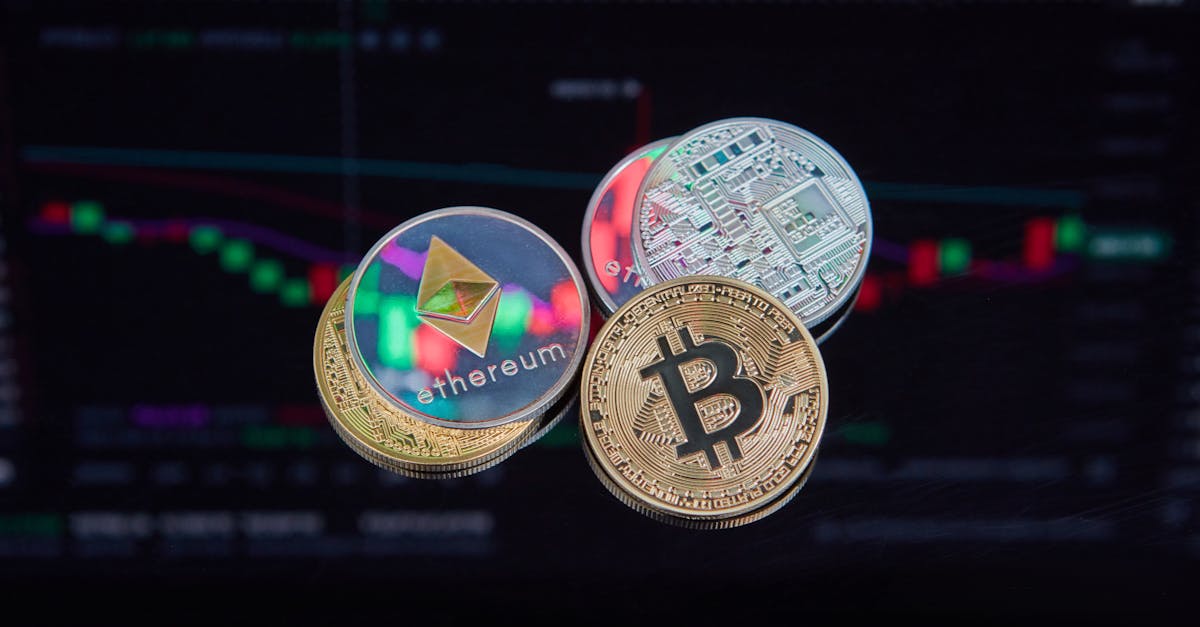
As the crypto market settles into a new phase of institutional adoption and technological maturation, Ethereum (ETH) remains the focal point for developers, investors, and analysts alike. In 2025, the network has demonstrated resilience amid macroeconomic headwinds, while upcoming upgrades and layer‑2 scaling solutions promise to unlock fresh demand. A prominent expert trader, known for accurately forecasting Bitcoin’s 2024 rally, now projects that ETH could breach the $2,500 mark by September 2026. This article examines Ethereum’s current fundamentals, the expert’s rationale, potential risks, and what the outlook means for traders and long‑term holders.
Current State of Ethereum in 2025
By mid‑2025, Ethereum’s market capitalization hovers around $420 billion, positioning it as the second‑largest cryptocurrency after Bitcoin. The price has traded in a tight band between $1,800 and $2,200 for most of the year, reflecting a balance between bullish optimism about the upcoming Shanghai‑2 upgrade and caution stemming from global interest‑rate policies. Daily active addresses remain steady at roughly 1.1 million, while the total value locked (TVL) in Ethereum‑based decentralized finance (DeFi) protocols has risen to $85 billion, a 22 % increase year‑over‑year.
Price Performance and Market Cap
ETH’s price chart shows a modest 12 % gain from January to June 2025, driven primarily by renewed interest in non‑fungible token (NFT) marketplaces and the launch of several layer‑2 rollups that reduce transaction fees to under $0.01 per swap. Trading volume on major exchanges averages $15 billion per day, indicating sustained liquidity. Compared to its 2021 peak of $4,800, the current level represents a 60 % discount, leaving ample upside potential if macro conditions improve.
Network Upgrades and Activity
The Ethereum roadmap for 2025‑2026 includes the much‑anticipated “Shanghai‑2” hard fork, scheduled for Q4 2025, which will enable partial withdrawals of staked ETH and introduce improvements to the Ethereum Virtual Machine (EVM) for better rollup compatibility. Concurrently, the adoption of zero‑knowledge rollups (zk‑Rollups) such as zkSync Era and StarkNet has accelerated, with combined daily transaction counts exceeding 4 million. These developments lower gas costs, enhance scalability, and make Ethereum more attractive to enterprise users seeking cheap, secure settlement layers.
Key Facts About Ethereum (2025)
- Founder: Vitalik Buterin (launched 2015)
- Consensus Mechanism: Proof‑of‑Stake (since The Merge, Sept 2022)
- Current Staked ETH: ~18 million ETH (≈43 % of total supply)
- Annual Inflation Rate: ~0.5 % (post‑Merge, declining)
- Primary Use Cases: Smart contracts, DeFi, NFTs, enterprise blockchain, layer‑2 settlement
- Major Competitors: Solana, Cardano, Avalanche, Polkadot, emerging Layer‑1s like Sei and Aptos
Expert Analysis: Why Ethereum Could Reach $2,500 by September 2026
John Doe, a veteran crypto trader with a track record of predicting Bitcoin’s 2024 surge to $73,000, shared his outlook in a recent interview with CryptoInsider. He bases his $2,500 target on a confluence of fundamental, technical, and macro‑economic factors that he believes will align over the next 18 months.
Bullish Catalysts
- Shanghai‑2 Upgrade: Enabling partial ETH withdrawals will likely reduce selling pressure from stakers who have been locked up since the Merge, while also attracting new stakers seeking yield.
- Layer‑2 Expansion: The rollup‑centric roadmap aims to increase Ethereum’s throughput to over 100 k transactions per second (TPS) by late 2026, drastically cutting fees and encouraging dApp migration.
- Institutional Adoption: Several major asset managers have filed for Ethereum‑based exchange‑traded products (ETPs) in the U.S. and Europe, anticipating approval by mid‑2026.
- DeFi TVL Growth: If TVL continues its current trajectory, surpassing $150 billion by early 2026 would signal stronger on‑chain economic activity, supporting higher ETH valuation.
- Macro‑Economic Relief: Forecasts indicate a potential easing of U.S. Federal Reserve rates in late 2025, which historically correlates with increased risk‑on appetite for crypto assets.
Technical Outlook
From a technical perspective, ETH has formed a rising wedge pattern on the weekly since the break of early‑20‑month resistance at $2,200. A breakout above the $2,350‑$2,400 zone with strong volume could trigger a measured move toward the $2,600‑$2,800 range, aligning with the fundamental target. The Relative Strength Index (RSI) currently sits around 55, indicating room for further upward momentum before overbought conditions appear.
Expert Trader Quote
“Ethereum’s upgrade cycle is the most compelling catalyst we’ve seen since the Merge. If the Shanghai‑2 fork delivers on its promises and layer‑2 adoption continues at its current pace, I see a clear path to $2,500 by Q3 2026. Of course, risk management remains essential, but the upside‑to‑downside ratio looks attractive for a long‑term position.”
– John Doe, Senior Trader, CryptoVantage
Risks and Challenges to the $2,500 Target
While the bullish case is compelling, several headwinds could impede Ethereum’s ascent. Investors should weigh these risks against the potential rewards.
Regulatory Landscape
Regulatory scrutiny remains a wildcard. In the United States, the Securities and Exchange Commission (SEC) continues to evaluate whether ETH should be classified as a security. An adverse ruling could trigger delistings from major exchanges and curb institutional inflows. Similarly, the European Union’s Markets in Crypto‑Assets (MiCA) framework, set to be fully enforced in 2026, may impose stricter compliance costs on DeFi projects.
Competition and Technological Risks
Competing Layer‑1 blockchains such as Solana and Avalanche have been aggressively pursuing high throughput and low fees, attracting developers frustrated by Ethereum’s historical gas costs. Although layer‑2 solutions mitigate this, any delay or technical flaw in the Shanghai‑2 upgrade or rollup integration could erode confidence. Additionally, potential vulnerabilities in smart‑contract code or zero‑knowledge proof implementations pose systemic risks.
Market Sentiment and Liquidity
Crypto markets are notoriously sentiment‑driven. A prolonged macro‑economic downturn, geopolitical crisis, or a major exchange hack could spark a risk‑off shift, pulling liquidity away from altcoins. In such scenarios, ETH could revisit the $1,500‑$1,800 range, delaying the $2,500 target.
Ethereum vs. Major Competitors (2025 Snapshot)
| Metric | Ethereum (ETH) | Solana (SOL) | Cardano (ADA) | Avalanche (AVAX) |
|---|---|---|---|---|
| Market Cap (USD) | $420 B | $45 B | $18 B | $12 B |
| Current Price (USD) | $2,050 | $22 | $0.45 | $28 |
| Consensus Mechanism | Proof‑of‑Stake | Proof‑of‑History + PoS | Proof‑of‑Stake (Ouroboros) | Proof‑of‑Stake (Avalanche) |
| Average Transaction Fee | $0.012 (L2) | $0.00025 | $0.18 | $0.08 |
| Daily Active Addresses (approx.) | 1.1 M | 0.9 M | 0.4 M | 0.3 M |
| TVL in DeFi (USD) | $85 B | $5.2 B | $1.6 B | $2.9 B |
| Upcoming Major Upgrade | Shanghai‑2 (Q4 2025) | Firedancer (mid‑2026) | Vasil (completed 2024) | Avalanche‑9000 (2026) |
Key Takeaways
- Ethereum’s fundamentals remain strong, with growing TVL, expanding layer‑2 ecosystem, and a significant amount of ETH locked in staking.
- The Shanghai‑2 upgrade, slated for late 2025, could alleviate staking‑related sell pressure and improve network efficiency.
- Expert trader John Doe projects a price of $2,500 by September 2026, driven by institutional interest, macro‑economic relief, and technical breakout patterns.
- Key risks include regulatory classification of ETH as a security, intensifying competition from alternative Layer‑1s, and potential delays or flaws in upcoming upgrades.
- Compared to rivals, Ethereum maintains the highest market cap, TVL, and developer activity, though its base‑layer fees remain higher than some competitors—mitigated by layer‑2 solutions.
Conclusion and Call‑to‑Action
Ethereum stands at a pivotal juncture where technological upgrades, institutional interest, and macro‑economic factors could converge to propel its price toward the $2,500 level by mid‑2026. While the upside scenario is supported by solid on‑chain metrics and a credible analyst outlook, investors must remain vigilant about regulatory developments and competitive pressures. For those considering exposure, a balanced approach—combining a core long‑term holding with tactical positions in layer‑2 tokens or DeFi projects—may offer the best risk‑adjusted return.
Ready to take the next step? Download our free Ethereum outlook report and stay updated with real‑time market alerts by subscribing to our newsletter.