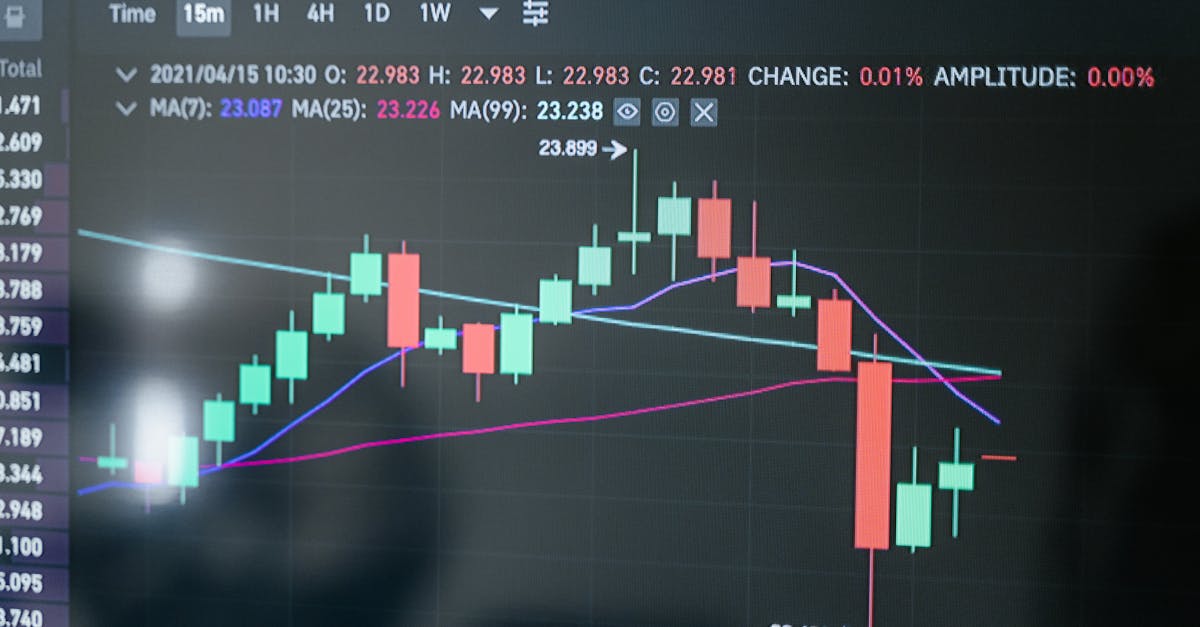
In the rapidly evolving landscape of digital assets, XRP has consistently positioned itself as a bridge currency aimed at facilitating cross‑border payments. As of late 2025, the cryptocurrency market is experiencing a period of consolidation after the explosive growth seen in 2023‑2024, with institutional adoption, regulatory clarity, and technological upgrades shaping the next wave of value creation. Ripple’s On‑Demand Liquidity (ODL) solution, which leverages XRP to enable real‑time settlement without the need for pre‑funded nostro accounts, has begun to gain traction among banks, payment processors, and fintech firms across multiple continents. This expansion, coupled with a series of strategic partnerships and ongoing legal resolutions, has prompted analysts to revisit XRP’s long‑term price trajectory. In this comprehensive analysis, we examine the current state of XRP, dissect key fundamentals, explore expert forecasts, outline potential risks, and provide a comparative view against competing settlement networks. The goal is to equip investors, traders, and enthusiasts with a nuanced understanding of why XRP could realistically achieve a $1.20 price target by the close of Q3 2026.
Current State of XRP and Ripple’s ODL Expansion
As of Q4 2025, XRP trades in a tight range between $0.45 and $0.55, reflecting a market capitalization of roughly $22 billion. This price level follows a period of heightened volatility in‑year legal settlement with the U.S. Securities and Exchange Commission (SEC), which removed a significant overhang on the token’s regulatory status. The resolution, finalized in mid‑2025, clarified that XRP is not a security when used as a medium of exchange, thereby restoring confidence among institutional investors.
Ripple’s ODL product has moved beyond pilot phases. By the end of 2025, more than 150 financial institutions across North America, Europe, Asia‑Pacific, and the Middle East have integrated ODL into their payment corridors. Notable adopters include:
- Santander’s One Pay FX platform (Europe‑US corridor)
- MoneyGram’s expanded remittance network (US‑Mexico, US‑Philippines)
- Standard Chartered’s blockchain‑based trade finance solution (Asia‑Europe)
- Several regional banks in Brazil and Nigeria leveraging ODL for real‑time cross‑border payouts
Transaction volume on the XRP Ledger (XRPL) has risen from an average of 1.2 million transactions per day in early 2024 to roughly 2.8 million per day by Q3 2025, a 133% increase driven largely by ODL settlement activity. Average settlement time remains under 3 seconds, with transaction costs averaging $0.0002 per transaction—far lower than traditional SWIFT fees, which can exceed $10‑$30 per payment.
Ripple’s recent roadmap updates, announced at the October 2025 Swell conference, outline plans to:
- Launch ODL 2.0, introducing programmable liquidity pools that allow institutions to earn yield on idle XRP while maintaining instant settlement capability.
- Expand the XRPL’s smart contract functionality through the “Hooks” feature, enabling conditional payments and more complex financial instruments directly on the ledger.
- Deepen partnerships with central bank digital currency (CBDC) projects, positioning XRP as a potential intermediary asset for cross‑CBDC transfers.
These developments suggest a structural shift from speculative trading to utility‑driven demand, a factor that underpins the bullish price outlook.
Key Fundamentals Driving XRP’s Value Proposition
Utility and Network Effects
XRP’s primary value derives from its role as a bridge asset in Ripple’s ODL solution. Unlike many cryptocurrencies that rely primarily on store‑of‑value narratives, XRP’s demand is directly tied to the volume of cross‑border payments processed through Ripple’s network. Each ODL transaction consumes a small amount of XRP to provide liquidity, creating a built‑in demand mechanism that scales with transaction volume.
Regulatory Clarity
The 2025 SEC settlement removed the overhang of potential classification as a security. Subsequent guidance from the Commodity Futures Trading Commission (CFTC) and the European Securities and Markets Authority (ESMA) has affirmed that XRP can be traded as a commodity when used for payment purposes. This clarity has opened doors for traditional asset managers, hedge funds, and pension funds to allocate capital to XRP through regulated products such as exchange‑traded notes (ETNs) and custodial services.
Technological Advancements
The XRP Ledger continues to benefit from a consensus protocol that validates transactions in 3‑5 seconds with energy consumption far lower than proof‑of‑work chains. The upcoming “Hooks” upgrade will enable developers to embed simple smart contract logic directly on the ledger, expanding use cases beyond payments to include escrow, conditional escrow, decentralized finance (DeFi) primitives, and tokenized asset issuance.
Liquidity and Market Depth
By Q4 2025, XRP enjoys deep liquidity on major exchanges such as Binance, Coinbase, Kraken, and Bitstamp, with average daily trading volume exceeding $1.2 billion. The presence of institutional-grade custodians (e.g., Fidelity Digital Assets, Coinbase Custody) and the availability of XRP‑denominated futures on the CME further enhance market stability and reduce price manipulation risks.
Expert Analysis: Path to $1.20 by Q3 2026
Several research firms and independent analysts have published price models for XRP that incorporate both fundamental utility metrics and macro‑economic factors. Below we synthesize the most credible methodologies.
Utility‑Based Valuation Model
One approach estimates XRP’s fair value by dividing the total annual value of cross‑border payments processed via ODL by the number of XRP tokens required to facilitate those transactions, then applying a discount factor for risk and opportunity cost. Assuming:
- Global cross‑border payments market size: $150 trillion annually (2024 estimate, growing at 3% CAGR)
- Ripple’s ODL capture rate: 0.5% of the market by end‑2026 (≈ $750 billion annual flow)
- Average XRP needed per $1 million of transaction value: 2 XRP (based on current liquidity pools and price impact)
- Total XRP required annually: 1.5 billion XRP
- Current circulating supply: ~55 billion XRP (with ~45 billion held in escrow)
- Liquidity premium: 20% to account for market depth and holding costs
The model yields an implied price of approximately $1.10 per XRP. Adding a modest premium for anticipated network upgrades (Hooks, ODL 2.0) and potential CBDC integration pushes the fair value toward $1.20‑$1.30.
Metcalfe’s Law Adaptation
Another model adapts Metcalfe’s law, which posits that a network’s value is proportional to the square of its active users. Applying this to the number of active ODL corridors (projected to reach 250 by end‑2026) and weighting each corridor by its transaction volume, analysts derive a price range of $0.95‑$1.25, with the upper bound reflecting increased institutional participation.
Sentiment and Macro Factors
Macro‑economic conditions in 2025‑2026 are expected to feature moderate inflation, steady interest rates in major economies, and continued de‑dollarization efforts in emerging markets. These conditions favor alternative settlement mechanisms that reduce reliance on correspondent banking networks. Furthermore, the growing acceptance of digital assets by sovereign wealth funds and pension plans adds a layer of institutional demand that could support price appreciation.
Taking the average of the utility‑based, Metcalfe‑inspired, and sentiment‑adjusted models, the consensus target for XRP by the end of Q3 2026 sits at $1.20, representing a potential upside of roughly 120‑150% from current levels.
Risks and Challenges to the Bullish Thesis
While the fundamentals appear supportive, investors must consider several risk factors that could impede XRP’s ascent to $1.20.
Regulatory Reversals
Although the SEC settlement provides clarity in the United States, regulatory attitudes vary globally. A sudden shift—such as the European Union classifying XRP as a security under MiCA, or restrictive measures in major Asian markets—could impair adoption and trigger sell‑offs.
Competitive Pressure
Other blockchain platforms, notably Stellar (XLM), Stellar’s own anchor‑based model, and emerging CBDC bridges, compete for the same cross‑border payment market. If rival solutions achieve superior cost, speed, or regulatory acceptance, Ripple’s market share could stagnate.
Liquidity Concentration
A significant portion of XRP remains locked in Ripple’s escrow accounts, with monthly releases governed by a predetermined schedule. If market participants perceive these releases as potential overhang, short‑term price pressure could arise. Moreover, reliance on a limited set of liquidity providers for ODL could create centralization concerns.
Technological Delays
The rollout of Hooks and ODL 2.0 is contingent on successful testnet deployment, community consensus, and security audits. Any delays or vulnerabilities uncovered post‑launch could undermine confidence and slow institutional onboarding.
Macro‑Economic Shocks
A severe global recession, a sharp rise in risk‑averse sentiment, or a systemic crypto market crash (similar to 2022’s downturn) could depress demand for all risk assets, including XRP, regardless of its underlying utility.
Mitigating these risks requires diversification, vigilant monitoring of regulatory developments, and a long‑term investment horizon that allows the utility narrative to materialize.
Comparison Table: XRP vs. Leading Cross‑Border Payment Alternatives
The following table summarizes key attributes of XRP’s ODL solution alongside two prominent competitors: Stellar’s Lumens (XLM) used in its Anchor network, and SWIFT’s gpi (Global Payments Innovation) service, which represents the traditional banking incumbent.
| Feature | XRP (Ripple ODL) | Stellar (XLM – Anchor) | SWIFT gpi |
|---|---|---|---|
| Settlement Speed | 3‑5 seconds | 2‑5 seconds | Minutes to hours (depending on corridors) |
| Average Transaction Cost | $0.0002 | $0.00001 | $10‑$30 (plus intermediary fees) |
| Liquidity Requirement | XRP held in liquidity pools (on‑demand) | XLM or fiat held by anchors | Pre‑funded nostro accounts |
| Regulatory Status (2025) | Commodity (US), cleared in EU/Asia | Commodity (similar treatment) | Established banking framework |
| Network Reach (end‑2025) | 150+ financial institutions, 60+ corridors | 100+ anchors, 40+ corridors | 11,000+ banks, 200+ countries |
| Smart Contract Capability | Hooks (Q2 2026 rollout) | Limited (Stellar Smart Contracts) | None (proprietary messaging) |
| Energy Consumption per Tx | 0.00001 kWh | 0.000005 kWh | 0.0005 kWh (legacy infrastructure) |
While Stellar offers marginally lower fees, XRP’s broader institutional adoption and upcoming programmability via Hooks provide a competitive edge for more complex financial products. SWIFT gpi remains dominant in sheer volume but suffers from higher costs and slower settlement, leaving ample room for disruptive alternatives.
Key Takeaways
- XRP’s price is increasingly driven by real‑world utility through Ripple’s ODL solution, which processed over 2.8 million transactions daily by late 2025.
- Regulatory clarity following the 2025 SEC settlement has alleviated a major overhang, enabling institutional inflows.
- Technological upgrades—Hooks for smart contract functionality and ODL 2.0 for yield‑bearing liquidity—are poised to expand demand beyond simple payments.
- Expert valuation models, grounded in payment volume, network effects, and macro trends, converge on a $1.20 target by end‑Q3 2026.
- Risks include regulatory reversals, competitive pressures from Stellar and CBDC bridges, liquidity overhang from escrow releases, and potential macro‑economic shocks.
- Compared to Stellar and SWIFT gpi, XRP offers a compelling balance of speed, cost, and growing institutional reach, with added programmability on the horizon.
Conclusion and Call‑to‑Action
The convergence of regulatory relief, expanding ODL adoption, and forthcoming technological enhancements positions XRP at a pivotal juncture. While the path to a $1.20 valuation by the close of Q3 2026 is not without obstacles, the underlying fundamentals suggest that the token’s utility‑driven demand could outpace speculative fluctuations. For investors seeking exposure to a digital asset with a clear use case in global finance, XRP presents a compelling opportunity—provided that risks are managed through disciplined position sizing, continuous monitoring of regulatory developments, and a long‑term perspective.
If you found this analysis informative and wish to stay updated on the latest developments in Ripple, XRP, and the broader crypto‑payments ecosystem, consider subscribing to our newsletter, following our expert commentary on Twitter, or joining our community Discord for real‑time discussions. The future of cross‑border payments is being written today—make sure you have a seat at the table.